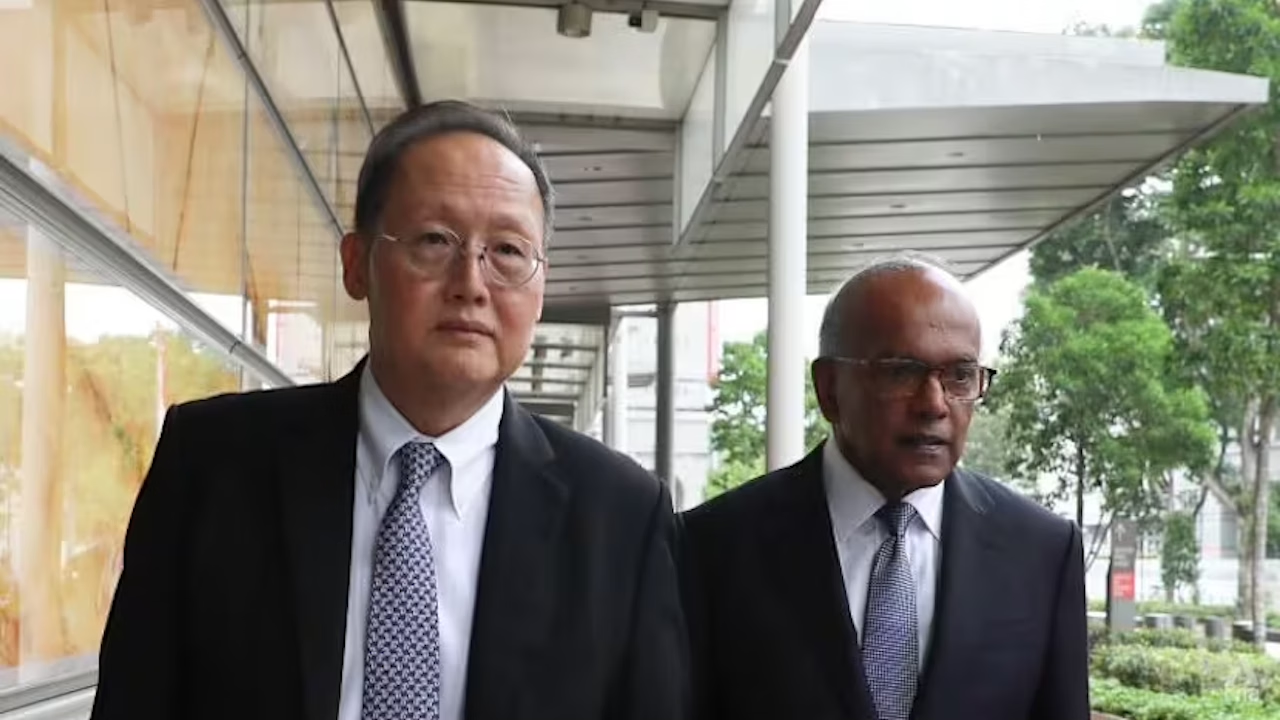
Freedom of expression does not extend to publishing false and defamatory allegations without basis, Home Affairs Minister K Shanmugam and Manpower Minister Tan See Leng said on Friday July 17 2026, rejecting suggestions that their successful defamation suit against Bloomberg was about press freedom. In a statement posted on Facebook in response to media queries following the court’s judgment on Tuesday July 14 2026, both ministers noted that this principle was “reaffirmed by the Court in this case”. Singapore supports “robust journalism and vigorous public debate”, but freedom of expression carries responsibilities, they reiterated.
Some commentators, particularly in the Western media, say that defamation suits have a ‘chilling effect’. But Singapore’s experience does not bear this out. The statement came after Bloomberg and The New York Times (NYT) published articles on the High Court’s ruling on Tuesday July 14 2026 in the defamation case. The NYT article described the case as a “significant test of the country’s libel laws and their implications for press freedom”.
The ministers also took issue with Bloomberg’s response after the ruling in which the news organisation said it respected the court’s decision while maintaining that its reporting was accurate. The news organisation also said its story was solid, its reporters had acted with integrity and its editorial standards had been met. The ministers said these positions are difficult to reconcile, because if Bloomberg truly respects the court’s decision, then it should address the court’s findings, as any responsible organisation should, otherwise, Bloomberg’s professed commitment to accuracy, editorial standards, public interest journalism, and journalistic integrity will ring hollow.
Shanmugam and Tan called the court’s findings “comprehensive and unequivocal”, adding that the court found Bloomberg had maliciously defamed and deliberately targeted them.
The ministers also said the court found Bloomberg’s claim that the article formed part of a broader story of public interest was merely a “cover” devised to publish allegations about them. The ministers added that the court found Bloomberg had failed the standards of responsible journalism by publishing multiple falsehoods, making grave allegations without basis and denying them a fair opportunity to respond. The ministers said these findings formed the basis of the court’s decision, including its award of aggravated damages.
The ministers added that this case is not about freedom of the press, it is about whether a news organisation can maliciously target individuals, publish grave allegations founded on falsehoods, and deny those accused a fair opportunity to respond. The court held that it cannot. The court had awarded the ministers damages of S$230,000 (US$177,874) each for defamation by Bloomberg and its reporter, Mr Low De Wei.
Justice Audrey Lim found that Bloomberg’s December 2024 article about Good Class Bungalow (GCB) transactions had defamed the ministers. The judge rejected the news organisation’s argument that the article merely examined a broader trend of non-caveated GCB transactions and that the ministers were cited only as examples. Instead, the judge said the article, when read as a whole, linked the ministers’ transactions with claims about secrecy, opacity and money laundering, creating a defamatory impression.
The judge also rejected Bloomberg’s reliance on a public interest defence known as the Reynolds defence in United Kingdom law, saying it is not part of Singapore law.
Leave a Reply